Intelligence and Insights

Research for leaders navigating AI and the next generation of financial markets infrastructure

Latest Intelligence

Showing 15 of 15 briefs

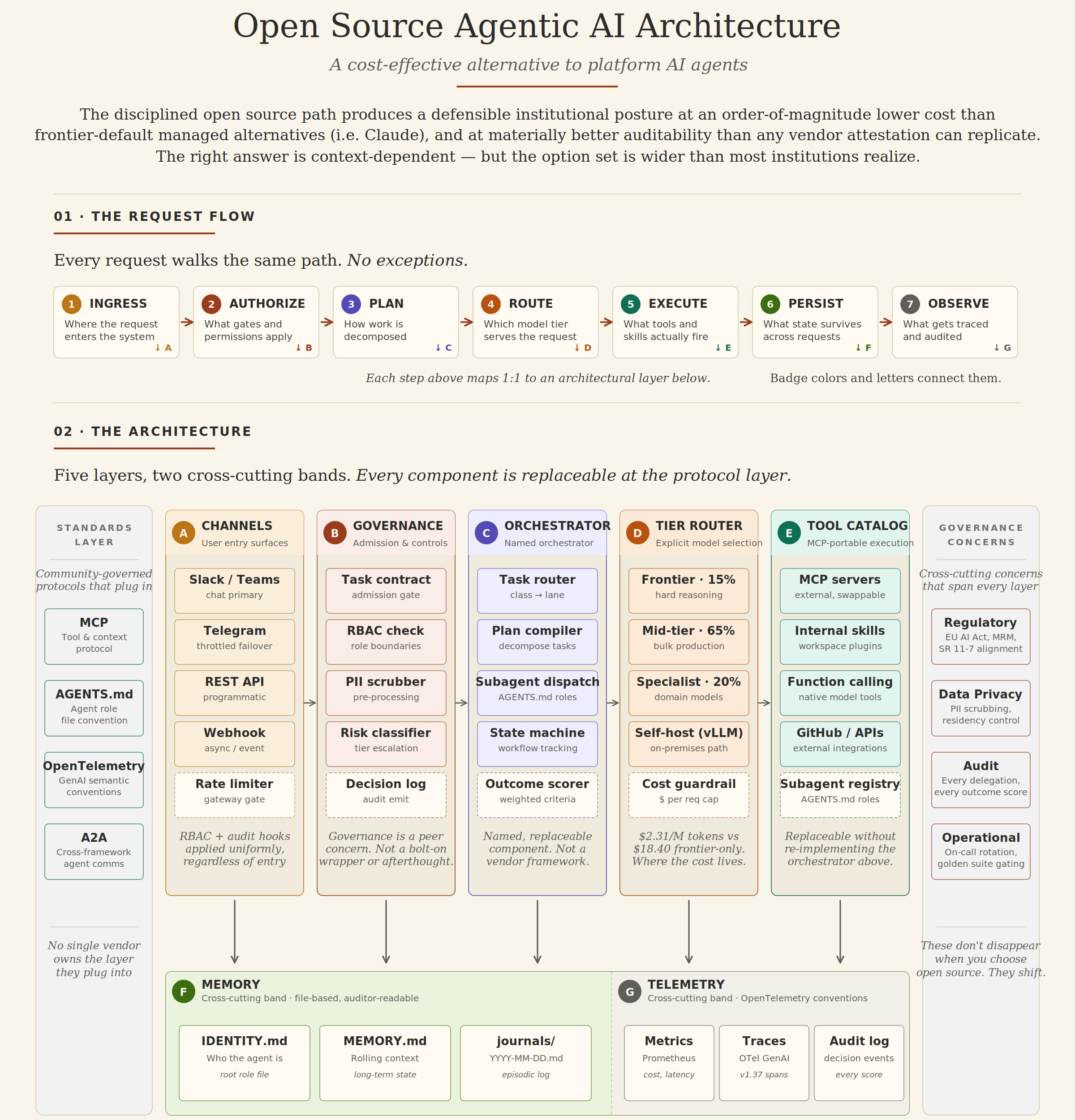
Cover of Open Source Agentic AI Architecture

May 2026 · AI Strategy · Audience: C-Suite, Strategy, Technology

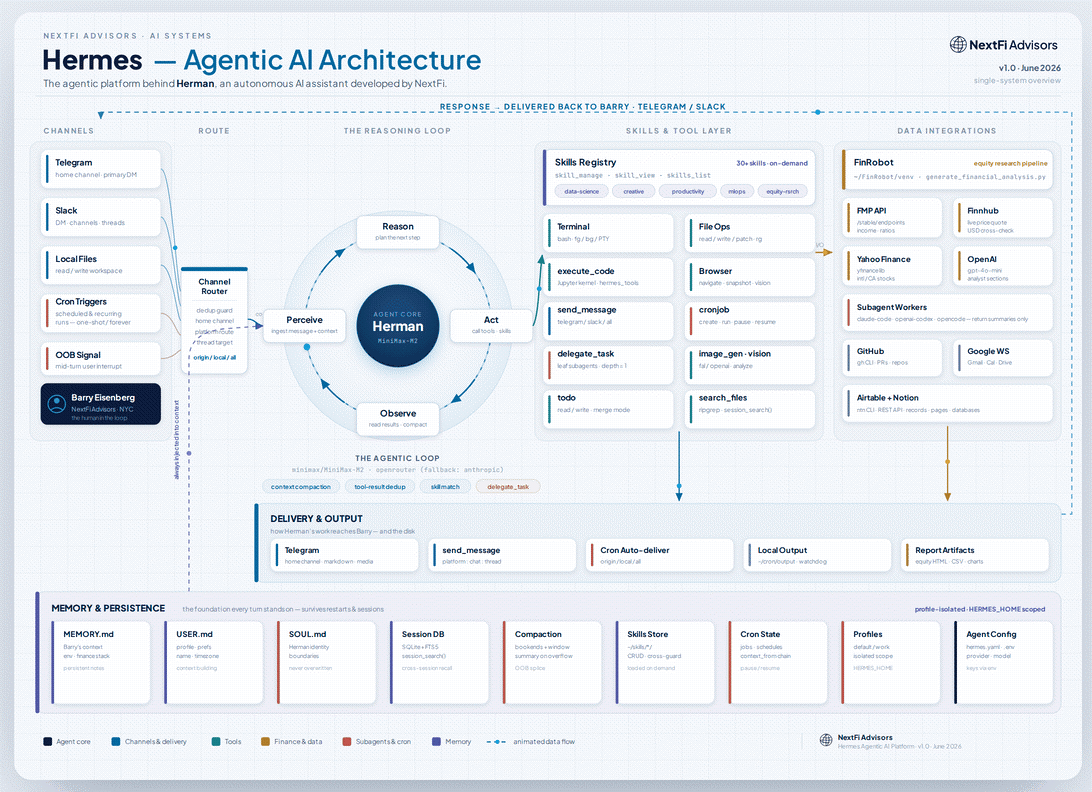
Open Source Agentic AI Architecture

A five-layer open source agentic AI architecture delivers 10–80× cost savings versus managed frontier platforms, with superior auditability and no vendor lock-in. Six discipline conditions separate viable institutional deployment from aspirational adoption.

See infographic
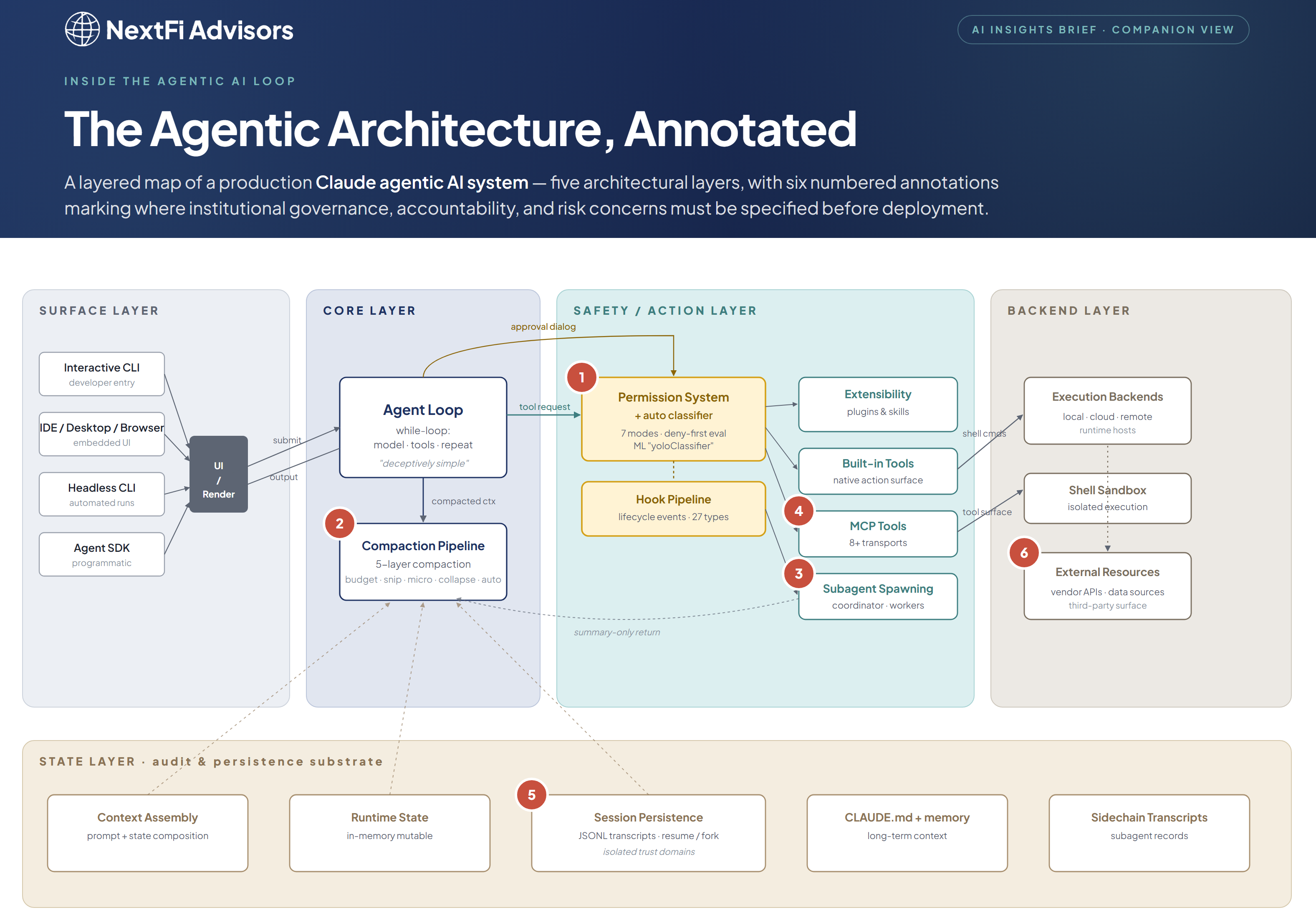
Cover of The Agentic Architecture, Annotated

April 2026 · Enterprise Architecture · Audience: C-Suite, Strategy, Risk, Technology

The Agentic Architecture, Annotated

A layered map of a production Claude agentic AI system across five architectural layers, with six institutional annotations marking where governance, accountability, and model risk decisions must be specified before deployment — not after.

See Infographic
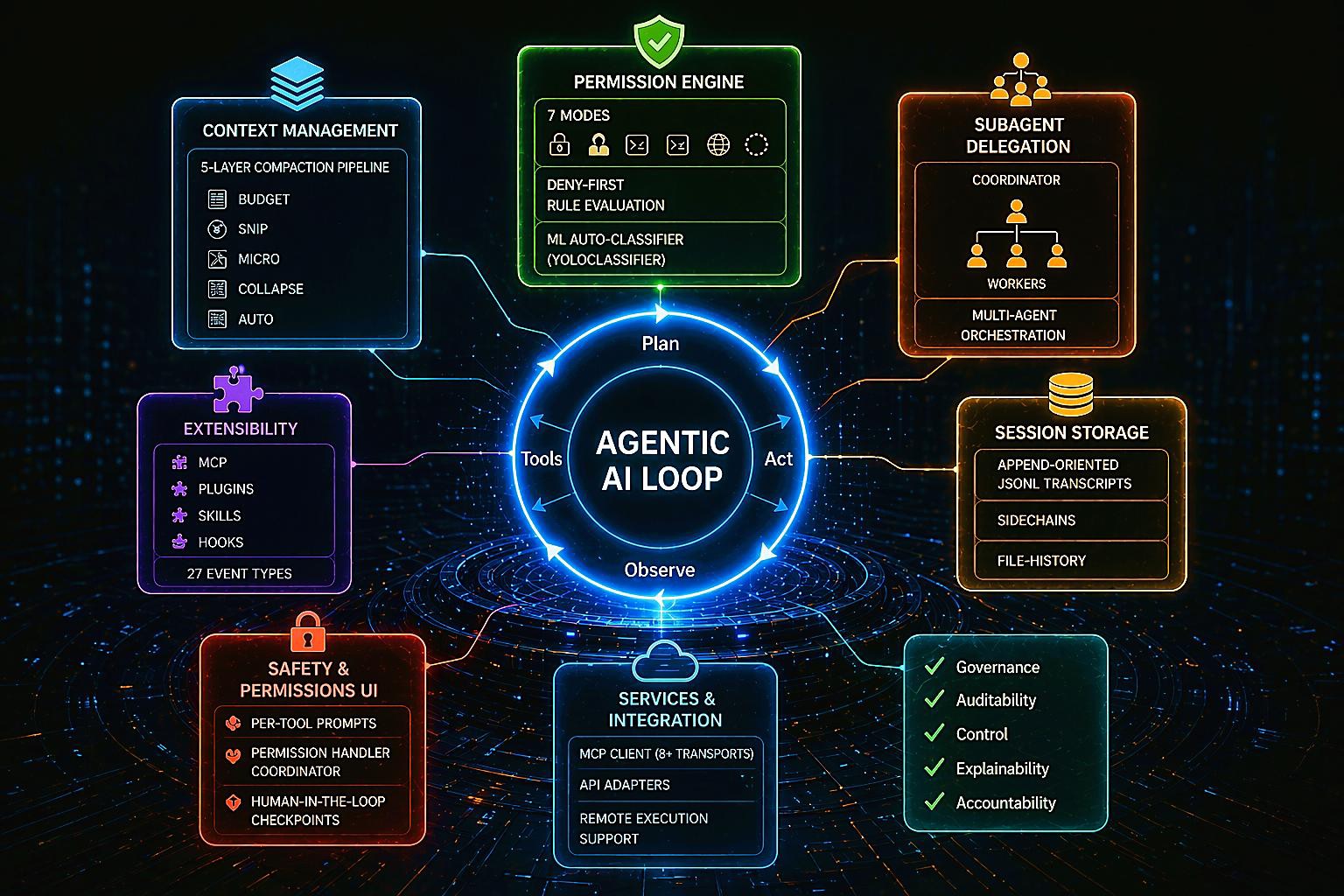
Cover of Inside the Agentic AI Loop

April 2026 · AI Strategy · Audience: C-Suite, Strategy, Risk, Technology

Inside the Agentic AI Loop

A peer-reviewed structural analysis of Anthropic's Claude Code reveals that the real governance challenges in agentic AI lie not in the core loop, but in surrounding subsystems: permission engines, context pipelines, and subagent delegation frameworks that will stress-test model risk frameworks in production.

Read full brief
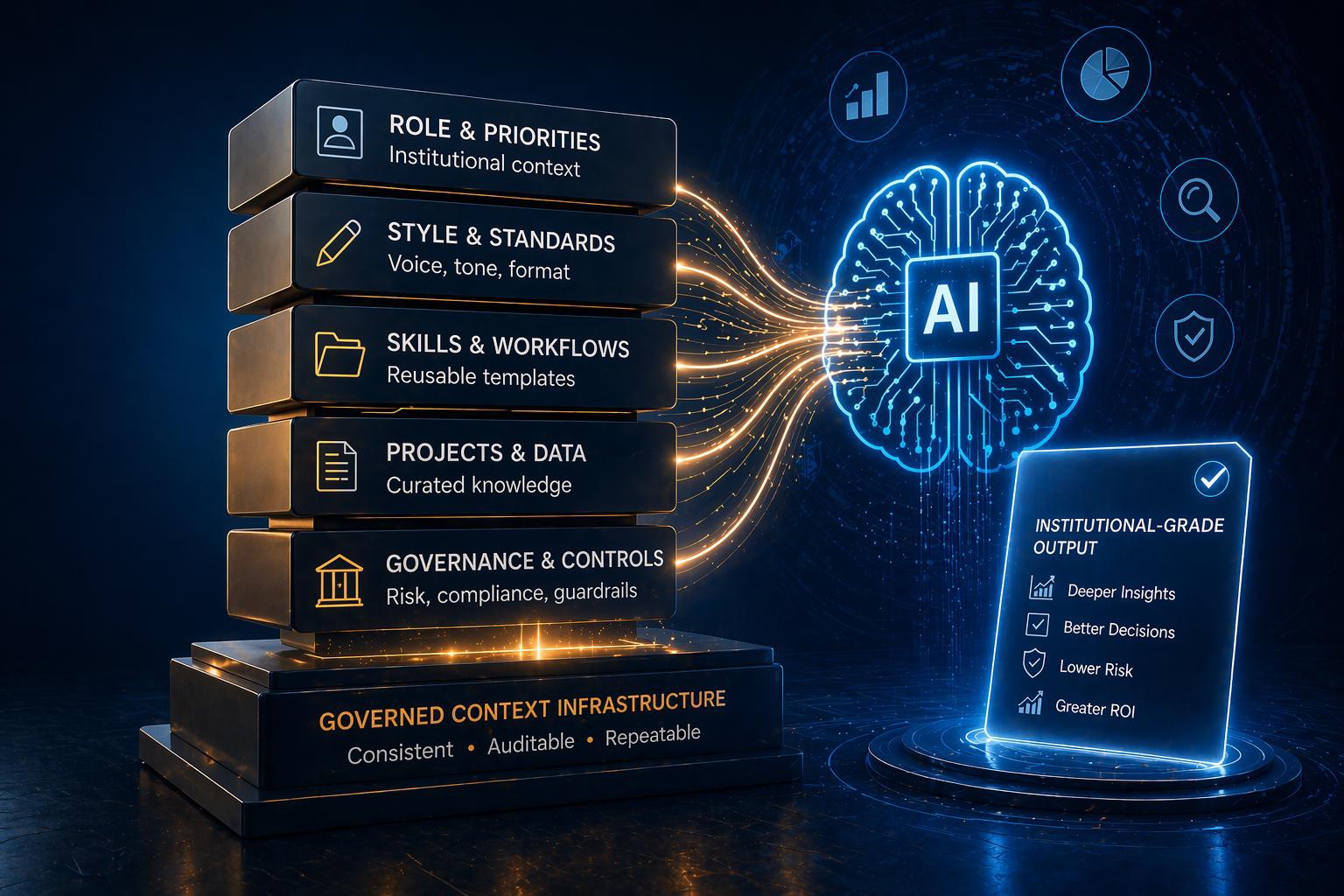
Cover of Context Engineering: How Enterprise Operating Models Impact AI Performance & Output

April 2026 · AI Strategy · Audience: C-Suite, Strategy, Risk, Technology

Context Engineering: How Enterprise Operating Models Impact AI Performance & Output

Most financial institutions use AI as a session-by-session tool, leaving performance on the table. The real competitive gap is context architecture—persistent files, governed templates, and session discipline—not model selection or prompt wording.

Read full brief
Cover of Lessons For Enterprise AI Deployments

April 2026 · AI Insights Brief · Audience: C-Suite, Strategy, Technology

Lessons For Enterprise AI Deployments

The differentiating variable in enterprise AI deployment is not the model - it is the organization. Leadership readiness, process redesign, workforce alignment, and willingness to absorb failure determined whether deployments generated structural value or stalled in the pilot-to-production gap.

Read full brief
Cover of MCP: The USB-C for AI Integrations

April 2026 · Technology Architecture · Audience: Technology, Strategy

MCP: The USB-C for AI Integrations

MCP eliminates the single most expensive bottleneck in enterprise AI deployment: the integration layer. For institutions running many internal systems, it transforms AI connectivity from bespoke engineering into a reusable plug-and-play infrastructure standard.

Read full brief
Cover of x402 Protocol: The Payment Infrastructure for Agentic AI

March 2026 · AI Strategy · Audience: C-Suite, Strategy, Treasury, Technology

x402 Protocol: The Payment Infrastructure for Agentic AI

The x402 protocol embeds stablecoin payments directly into HTTP requests, enabling AI agents to transact autonomously at scale. With 75M+ transactions processed and 10x year-over-year growth, it represents a tectonic shift from human-centric to machine-native payment infrastructure.

Read full brief
Cover of Multi-Agent Design Models for Financial Institutions

March 2026 · Enterprise Architecture · Audience: Technology, Strategy, C-Suite

Multi-Agent Design Models for Financial Institutions

Multi-agent AI architecture is the next phase of institutional deployment, centered on coordinated teams of specialized agents. This brief distills five design patterns for executing complex multi-step workflows in high-control financial environments.

Read full brief
Cover of SWIFT's Shift to Blockchain Infrastructure

March 2026 · Tokenization · Audience: Strategy, Risk, C-Suite

SWIFT's Shift to Blockchain Infrastructure

SWIFT's shift from experimentation to production-ready shared ledger infrastructure marks a structural turning point for global finance. The transition reframes adoption timelines for digital assets, tokenized securities, and cross-border settlement.

Read full brief
Cover of DTCC vs SWIFT: Solving Interoperability

March 2026 · Market Structure · Audience: Strategy, Risk, Technology

DTCC vs SWIFT: Solving Interoperability

Two of the most systemically important market infrastructures identify network fragmentation as a core barrier to adoption at scale. This brief compares DTCC and SWIFT approaches to interoperability, standards, and industry coordination.

Read full brief
Cover of Three Trends, One Infrastructure Stack

March 2026 · Market Structure · Audience: Strategy, Technology, C-Suite

Three Trends, One Infrastructure Stack

Three converging macro trends — AI-driven automation, programmable settlement, and stablecoin proliferation — are merging into a single infrastructure stack. This brief distills the institutional implications from the IMF's structural analysis of digital money convergence.

Read full brief
Cover of The Convergence Economy: Repricing of Intelligence and Transactions

March 2026 · Market Structure · Audience: C-Suite, Strategy, Risk, Treasury, Technology

The Convergence Economy: Repricing of Intelligence and Transactions

AI and programmable settlement infrastructure are simultaneously compressing cognitive labor and transaction coordination costs, generating an estimated $400B–$1.1T annual surplus. The decisive question is who captures it — and how it reshapes firms, labor share, and industry structure through 2036.

Read full brief
Cover of The Convergence Economy: Nine Strategic Imperatives

March 2026 · Market Structure · Audience: C-Suite, Strategy

The Convergence Economy: Nine Strategic Imperatives

When AI, tokenization, and stablecoins converge into one infrastructure, the strategic agenda for financial institutions must be rewritten. This framework maps nine imperatives that define competitive positioning in the convergence economy.

Read full brief
Cover of Leveraging AI: A Strategic Advantage for Financial Institutions

February 2026 · AI Strategy · Audience: C-Suite, Strategy, Technology

Leveraging AI: A Strategic Advantage for Financial Institutions

AI adoption in financial services has passed the proof-of-concept stage. Institutions building structural advantage have moved from experimentation to systematic deployment across operations, compliance, and client advisory functions.

Read full brief
Cover of Stablecoin Spillover to FX Markets

April 2026 · Market Structure · Audience: Risk, Treasury, C-Suite

Stablecoin Spillover to FX Markets

Stablecoins have created a parallel FX ecosystem that increasingly influences traditional currency volatility. When demand for digital dollars spikes, balance sheet constraints and intermediary pressure can raise the cost of conventional dollar funding.

Read full brief
Cover of Private Credit Tokenization: The Next Frontier in Real World Assets

February 2026 · Tokenization · Audience: Strategy, Risk, Treasury

Private Credit Tokenization: The Next Frontier in Real World Assets

The private credit market — now exceeding $2.5 trillion globally — stands at an inflection point. Tokenization is rapidly emerging as a credible infrastructure play for alternative assets, with Hamilton Lane, Invesco, and BlackRock leading the charge.

Read full brief
Cover of Stablecoins and Cross-Border Payments: The Strategic Imperative

February 2026 · Market Structure · Audience: Treasury, Strategy, Risk

Stablecoins and Cross-Border Payments: The Strategic Imperative

Stablecoins are compressing the cost and latency of cross-border payments from days to seconds. This brief examines the institutional implications as dollar-denominated stablecoins reshape correspondent banking and FX settlement infrastructure.

Read full brief
Cover of SEC Provides Clarity on Tokenized Securities

February 2026 · Tokenization · Audience: Risk, Strategy, C-Suite

SEC Provides Clarity on Tokenized Securities

The SEC's guidance establishes a clearer regulatory perimeter for institutional participation in tokenized securities. This brief distills the key implications for broker-dealers, custodians, and asset managers considering on-chain securities issuance.

Read full brief
Cover of The Hidden Plumbing: How Stablecoins Work

February 2026 · Market Structure · Audience: Strategy, Risk, Technology

The Hidden Plumbing: How Stablecoins Work

Stablecoin mechanics — reserve composition, redemption flows, peg maintenance, and on-chain settlement — are poorly understood even by institutional participants. This brief explains the infrastructure layer underpinning dollar-denominated digital payments.

Read full brief
Cover of Growth in Digital Asset Discourse on LinkedIn

February 2026 · Market Structure · Audience: Strategy, C-Suite

Growth in Digital Asset Discourse on LinkedIn

LinkedIn data reveals a sustained acceleration in digital asset professional content and engagement. This analysis tracks how institutional attention to tokenization, stablecoins, and digital payments has evolved across senior finance and technology audiences.

Read full brief